

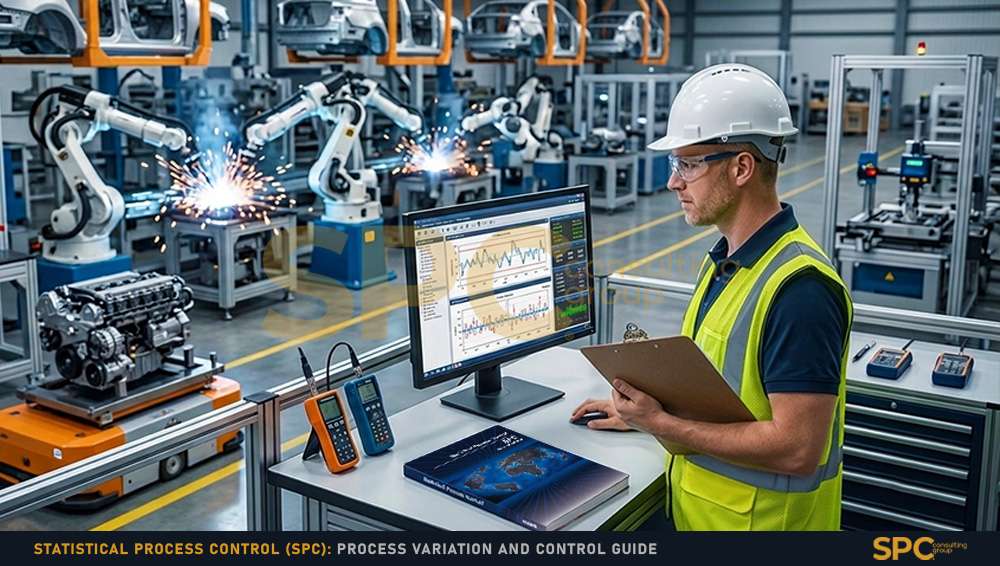
Statistical Process Control (SPC): Process Variation and Control Guide
Quick access
• What is SPC Statistical Process Control?
• Why is process variation important?
• How does SPC help control manufacturing processes?
• What is the role of SPC in the automotive industry?
• Why are measurement systems important in SPC?
• What does the AIAG SPC Manual emphasize?
• How does SPC support continuous improvement?
What is SPC Statistical Process Control?
SPC (Statistical Process Control) is a methodology used to monitor, analyze, and control process performance through the use of statistical techniques. Its primary purpose is to distinguish between normal process variation and unusual events that may indicate a problem requiring attention.
One of the most recognized tools used in SPC is the control chart, which helps organizations determine whether a process is operating consistently over time. By monitoring process behavior, companies can identify trends, detect instability, and take corrective actions before defects occur.
SPC is one of the Automotive Core Tools alongside APQP, PPAP, FMEA, MSA, and Control Plan. It is widely used throughout the automotive industry and supports compliance with IATF 16949 requirements for process monitoring, process capability, and continual improvement.
Unlike traditional inspection methods that focus on detecting defective products after they are produced, SPC focuses on understanding and controlling the process that creates those products.
Why is process variation important?
The foundation of SPC is the understanding of variation.
Every manufacturing process contains variation. No two products, measurements, machines, or operators perform exactly the same way every time. The goal of SPC is not to eliminate variation entirely, but to understand it and reduce unnecessary variation whenever possible.
Common sources of variation include:
- Machines and equipment that perform differently over time
- Tool wear and equipment deterioration
- Raw materials with changing characteristics
- Environmental conditions such as temperature and humidity
- Human factors and operator practices
- Measurement system variation
Organizations that understand variation are better equipped to make informed decisions, improve consistency, and prevent defects before they reach customers.
How does SPC help control manufacturing processes?
SPC provides objective information about process behavior through statistical analysis.
Instead of relying on assumptions or isolated inspection results, organizations use data collected over time to evaluate whether a process remains stable and predictable.
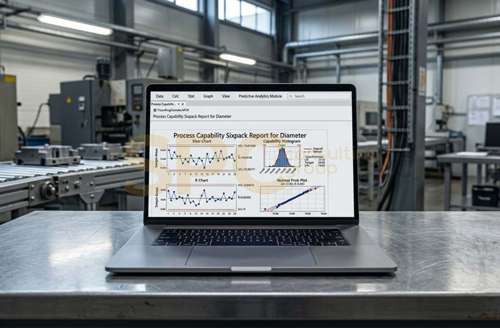
Control charts are particularly valuable because they help identify:
- Unusual process shifts
- Trends and patterns
- Cycles and recurring issues
- Special causes of variation
- Potential process instability
When a process remains stable, organizations can focus on continuous improvement efforts. When instability is detected, corrective actions can be taken before quality problems occur.
This preventive approach aligns closely with modern quality management principles and automotive customer expectations.
What is the role of SPC in the automotive industry?
SPC has become a fundamental methodology throughout the automotive supply chain.
Automotive manufacturers and suppliers use SPC to:
- Monitor critical manufacturing processes
- Improve product consistency
- Support customer-specific requirements
- Demonstrate process capability
- Reduce scrap and rework
- Improve customer satisfaction
- Support compliance with IATF 16949
Many automotive organizations integrate SPC into Advanced Product Quality Planning (APQP) activities and use it alongside FMEA, MSA, PPAP, and Control Plans.
Because automotive production often involves high-volume manufacturing and strict customer requirements, maintaining stable and capable processes is essential. SPC provides the data-driven foundation necessary to achieve that objective.
Why are measurement systems important in SPC?
One of the most overlooked aspects of SPC is the quality of the measurement system itself.
Before organizations can trust SPC data, they must ensure that measurements are reliable and consistent. If measurement systems are unstable or contribute excessive variation, the resulting data may lead to incorrect conclusions and poor decision-making.
For this reason, Measurement Systems Analysis (MSA) is closely linked to SPC.
Reliable measurement systems help organizations:
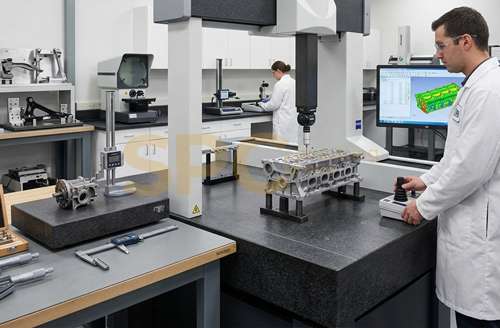
- Collect accurate process data
- Detect meaningful process changes
- Avoid false alarms
- Improve confidence in decision-making
- Support process capability analysis
Without trustworthy measurement data, even the most sophisticated SPC program can become ineffective.
What does the AIAG SPC Manual emphasize?
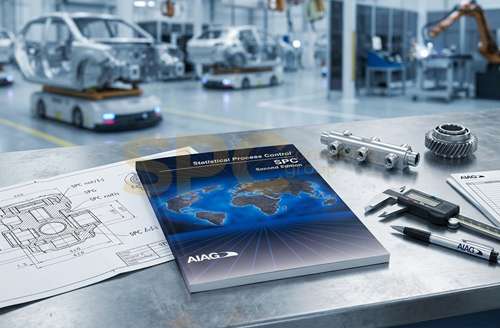
The AIAG SPC Manual serves as a practical guide for understanding statistical process control within manufacturing environments.
One of its key principles is that data collection alone does not improve quality. The purpose of collecting and analyzing data is to gain knowledge about process behavior and support improvement actions.
The manual emphasizes several important concepts:
- Understanding process variation
- Using statistical methods to support decision-making
- Focusing on the process rather than only the product
- Applying data to drive continual improvement
- Developing a deeper understanding of statistical techniques
The manual also encourages organizations to continue expanding their statistical knowledge beyond the basic concepts introduced in SPC.
As manufacturing systems become increasingly automated and data-driven, statistical thinking remains one of the most valuable skills for quality professionals and engineers.
How does SPC support continuous improvement?
SPC supports continuous improvement by providing objective evidence of process performance.
Rather than relying on assumptions, organizations can use SPC data to identify opportunities for improvement, verify corrective actions, and monitor long-term process stability.
Benefits include:
- Reduced process variation
- Improved process consistency
- Better product quality
- Lower costs associated with defects
- Increased customer confidence
- Stronger operational performance
By focusing on prevention rather than correction, SPC helps organizations build more reliable and predictable manufacturing processes.
Looking to strengthen your team’s understanding of SPC Statistical Process Control and process variation analysis?
Contact SPC Consulting Group to learn more about customized SPC training and consulting services designed to help organizations improve process stability, reduce variation, and meet automotive industry requirements.
Frequently asked questions about SPC
What does SPC stand for?
SPC stands for Statistical Process Control.
What is the purpose of SPC?
The purpose of SPC is to monitor process performance, understand variation, and identify conditions that may lead to defects or process instability.
Is SPC required for IATF 16949?
SPC is widely used to support IATF 16949 requirements related to process monitoring, process capability, and continual improvement.
What is the most important concept in SPC?
Variation is considered the foundation of SPC because understanding variation is necessary for effective process control and improvement.
Training & Resources




COPYRIGHT: It is prohibited to copy, reproduce, distribute, publish, transmit, broadcast, or in any way exploit any part of this material without proper attribution or prior written authorization from Servicios Profesionales de Alta Consultoría S.C. (SPC Consulting Group) or the respective rights holders.
You must cite this article by copying and pasting the following text:
Statistical Process Control (SPC): Process Variation and Control Guide
SPC Consulting Group
https://spc-us.com/spc-statistical-process-control
If you want to know more about SPC, get in touch with us today, or check out our online trainings courses accessible from any location.
You may also be interested in:
No Comments