


ISO/IEC 17025:2017 Standard: Requirements and Key Changes
Quick access
• What is ISO/IEC 17025:2017?
• Who should implement ISO/IEC 17025?
• What are the main requirements of ISO/IEC 17025:2017?
• What changed in ISO/IEC 17025:2017?
• Why is ISO/IEC 17025 important?
• How is ISO/IEC 17025 different from ISO 9001?
What is ISO/IEC 17025:2017?
ISO/IEC 17025:2017 is the internationally recognized standard that specifies the general requirements for the competence, impartiality, and consistent operation of testing and calibration laboratories.
Published in November 2017, this standard replaced the 2005 edition to better reflect advances in laboratory technology, digital systems, and modern quality management practices.
Unlike ISO 9001, which applies to organizations in general, ISO/IEC 17025 is specifically designed for laboratories that perform testing, calibration, or sampling activities. It provides a framework that helps laboratories demonstrate technical competence while producing valid and reliable results.
Today, ISO/IEC 17025 is recognized worldwide and is widely used by laboratories serving industries such as automotive, aerospace, healthcare, pharmaceuticals, food, environmental testing, energy, electronics, and manufacturing.
Who should implement ISO/IEC 17025?
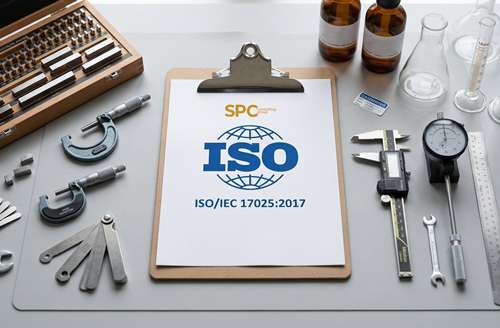
ISO/IEC 17025 applies to any organization that performs laboratory activities, regardless of its size or ownership.
Examples include:
- Calibration laboratories
- Testing laboratories
- Research laboratories
- Manufacturing quality laboratories
- Government laboratories
- Independent third-party laboratories
- University laboratories
Many customers, regulators, and accreditation bodies require compliance with ISO/IEC 17025 before accepting laboratory results.
For laboratories supporting industries such as automotive and aerospace, accreditation can be an essential competitive advantage.
What are the main requirements of ISO/IEC 17025:2017?
The 2017 edition introduced a new structure organized into eight clauses that combine management system requirements with technical competence requirements.
The standard includes:
- Scope: Defines the applicability of the standard to laboratory activities.
- Normative References: Lists supporting reference documents.
- Terms and Definitions: Provides common terminology used throughout the standard.
- General Requirements: Addresses impartiality and confidentiality.
- Structural Requirements: Defines organizational responsibilities and laboratory governance.
- Resource Requirements: Covers personnel competence, facilities, equipment, metrological traceability, and externally provided products and services.
- Process Requirements: Focuses on sampling, testing, calibration, method validation, measurement uncertainty, quality assurance, reporting, and handling nonconforming work.
- Management System Requirements: Ensures laboratories maintain an effective quality management system that supports continual improvement.
What changed in ISO/IEC 17025:2017?
Although ISO/IEC 17025:2017 has been in place for several years, its major updates continue to define how modern laboratories operate.
Some of the most significant improvements include:
Expanded Scope
The scope now clearly includes testing, calibration, and sampling activities, making the standard applicable to a broader range of laboratory services.
Process-Based Approach
Greater emphasis is placed on managing laboratory processes and achieving effective results rather than following highly prescriptive procedures.
Risk-Based Thinking
The standard introduces risk-based thinking, encouraging laboratories to identify risks and opportunities that could affect the validity of their activities.
Electronic Records
ISO/IEC 17025 recognizes the widespread use of laboratory information management systems (LIMS), electronic records, software, and digital reporting.
Greater Focus on Metrological Traceability
The revised standard strengthens requirements related to calibration traceability to ensure reliable and internationally comparable measurement results.
Why is ISO/IEC 17025 important?

Accreditation to ISO/IEC 17025 demonstrates that a laboratory is technically competent and capable of producing valid, consistent, and reliable results.
Organizations implementing the standard typically benefit from:
- Increased customer confidence
- International recognition of laboratory competence
- Improved measurement accuracy
- Reduced testing errors
- Better risk management
- More efficient laboratory processes
- Greater confidence during audits and assessments
- Improved compliance with customer and regulatory requirements
Because test and calibration results often influence critical business decisions, maintaining confidence in laboratory performance is essential.
How is ISO/IEC 17025 different from ISO 9001?
Although both standards promote quality management, they have different objectives.
- ISO 9001 focuses on establishing a quality management system applicable to any organization.
- ISO/IEC 17025 goes further by requiring laboratories to demonstrate technical competence, measurement capability, equipment control, method validation, and metrological traceability.
Many laboratories implement ISO 9001 principles, but ISO/IEC 17025 provides the additional technical requirements necessary for laboratory accreditation.
Looking to improve your laboratory’s competence and prepare for ISO/IEC 17025 accreditation?
SPC Consulting Group offers expert training, implementation support, internal audits, and consulting services to help testing and calibration laboratories meet ISO/IEC 17025 requirements with confidence.
Frequently asked questions about ISO/IEC 17025:2017
Who needs ISO/IEC 17025?
Any laboratory performing testing, calibration, or sampling activities can implement ISO/IEC 17025, particularly those seeking accreditation or serving regulated industries.
What is the purpose of ISO/IEC 17025?
Its purpose is to ensure laboratories produce technically valid, accurate, and reliable results through competent personnel, controlled processes, and effective quality management.
What are the biggest changes in ISO/IEC 17025:2017?
Major updates include a process-based approach, risk-based thinking, greater recognition of electronic records, expanded scope, and stronger emphasis on metrological traceability.
Is ISO/IEC 17025 certification or accreditation?
Laboratories are typically accredited to ISO/IEC 17025 by recognized accreditation bodies rather than certified.
Training & Resources




COPYRIGHT: It is prohibited to copy, reproduce, distribute, publish, transmit, broadcast, or in any way exploit any part of this material without proper attribution or prior written authorization from Servicios Profesionales de Alta Consultoría S.C. (SPC Consulting Group) or the respective rights holders.
You must cite this article by copying and pasting the following text:
ISO/IEC 17025:2017 Standard: Requirements and Key Changes
SPC Consulting Group
https://spc-us.com/new-standard-iso-iec-170252017
If you want to know more about ISO/IEC 17025:2017, get in touch with us today, or check out our online trainings courses accessible from any location.
You may also be interested in:
No Comments