

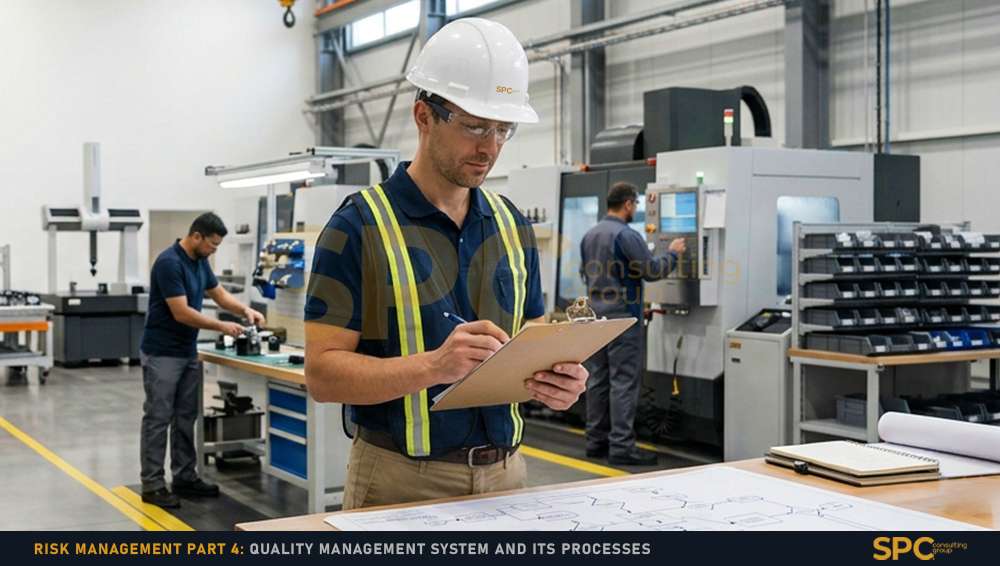
Risk Management Part 4: Quality Management System and Its Processes
Quick access
• What are QMS processes in ISO 9001?
• What does ISO 9001 Clause 4.4 require for each process?
• How do you map QMS processes and their interactions?
• How should risks and opportunities be addressed in QMS processes?
• How do you measure and improve QMS process performance?
An effective Quality Management System (QMS) depends on more than documented procedures. Organizations must identify the processes needed to meet customer requirements, understand how those processes interact, and manage the risks that could affect quality and business performance.
Under ISO 9001:2026, Clause 4.4, organizations must establish, implement, maintain, and continually improve their QMS and its processes. This includes defining inputs and outputs, assigning responsibilities, providing resources, monitoring performance, and addressing relevant risks and opportunities.
What are QMS processes in ISO 9001?
QMS processes are interconnected activities that transform inputs into expected outputs to achieve organizational objectives and meet customer requirements. They should be managed as a system rather than as isolated departmental activities.
Depending on the organization’s structure and operations, these processes may include:
- Operational processes: Production, manufacturing, product realization, design and development, purchasing, logistics, shipping, and distribution.
- Management processes: Strategic planning, management review, quality objectives, and internal audits.
- Support processes: Training, maintenance, calibration, document control, and resource management.
- Customer-related processes: Sales, marketing, customer communication, and complaint handling.
Not every organization needs the same processes. The QMS should reflect its products, services, operational complexity, customer requirements, and applicable regulations.
What does ISO 9001 Clause 4.4 require for each process?
Organizations must determine the elements needed to operate and control their QMS processes effectively. These include:
- Inputs and outputs: What each process requires and what it must deliver.
- Sequence and interaction: How processes connect, including handoffs between departments.
- Criteria and methods: Controls, acceptance criteria, and performance indicators used to evaluate effectiveness.
- Resources: Competent personnel, infrastructure, equipment, and an appropriate operating environment.
- Responsibilities and authorities: Who manages each process and is accountable for its results.
- Risks and opportunities: Factors that could prevent intended results or create opportunities for improvement.
- Evaluation and improvement: How performance is reviewed and processes are changed when necessary.
Organizations must also maintain and retain documented information to the extent necessary to support process operation and provide confidence that processes are carried out as planned. ISO 9001 does not prescribe one universal documentation format.
How do you map QMS processes and their interactions?
A process map helps organizations visualize how work flows across the business, from customer requirements to product or service delivery. It can reveal unclear responsibilities, missing handoffs, duplicated activities, and potential sources of nonconformity.
For example, a manufacturing process may begin with customer specifications, continue through purchasing and incoming inspection, and proceed to production, final inspection, and shipment. Each stage depends on the outputs and controls of preceding processes.
Organizations can use process maps, flowcharts, SIPOC diagrams (Suppliers, Inputs, Process, Outputs, and Customers), or other suitable methods. ISO 9001 does not mandate a specific mapping tool. The goal is to understand and manage process interactions effectively.
How should risks and opportunities be addressed in QMS processes?
Once processes are defined, organizations should evaluate what could affect their intended results. Under ISO 9001, Clause 4.4 works alongside Clause 6.1, which addresses risks and opportunities.
For example, an unreliable supplier could cause material shortages or defects, while inadequate equipment maintenance could increase downtime and product variation. These risks may require supplier monitoring, preventive maintenance, incoming inspections, or other proportionate controls.
Opportunities may include automation, improved inspection methods, employee training, or process redesign. Actions should be appropriate to their potential impact, integrated into normal operations, and evaluated for effectiveness.
How do you measure and improve QMS process performance?
Process performance indicators help organizations determine whether their processes achieve planned results. Useful measures in manufacturing may include defect rates, scrap and rework, on-time delivery, supplier performance, equipment downtime, and customer complaints.
Organizations should establish suitable monitoring and measurement methods, review results against defined criteria, and investigate significant deviations. When performance falls short, corrective action or process changes may be necessary.
Process owners should use performance data, audit findings, customer feedback, and risk assessments to identify improvement opportunities. This approach helps turn the QMS into a practical management system that supports consistent quality, customer satisfaction, and continual improvement.
Ready to strengthen your organization’s Quality Management System?
SPC Consulting Group provides ISO 9001 training and consulting to help organizations improve process management, integrate risk-based thinking, and build more effective quality management systems. Contact our team to learn how we can support your quality objectives.
Frequently asked questions about QMS Processes
Does ISO 9001 require a documented procedure for every process?
No. Organizations determine the documented information needed to support process operation and demonstrate that processes are carried out as planned. The appropriate level of documentation depends on the process, its complexity, and associated risks.
What tools can be used to map QMS processes?
Organizations can use process maps, flowcharts, SIPOC diagrams, and other methods that clearly show inputs, outputs, sequence, interactions, and responsibilities.
How are risks connected to QMS processes?
Organizations identify risks and opportunities that could affect process results, implement appropriate actions, and evaluate whether those actions are effective.
What are examples of QMS performance indicators?
Common examples include defect rates, scrap and rework, on-time delivery, supplier quality, customer complaints, and process downtime. Indicators should reflect each process’s objectives and intended results.
Training & Resources




COPYRIGHT: It is prohibited to copy, reproduce, distribute, publish, transmit, broadcast, or in any way exploit any part of this material without proper attribution or prior written authorization from Servicios Profesionales de Alta Consultoría S.C. (SPC Consulting Group) or the respective rights holders.
You must cite this article by copying and pasting the following text:
Risk Management Part 4: Quality Management System and Its Processes
SPC Consulting Group
https://spc-us.com/risk-management-part-4-quality-management-system-and-its-processes
If you want to know more about Quality Management Systems, get in touch with us today, or check out our online trainings courses accessible from any location.
You may also be interested in:
No Comments