

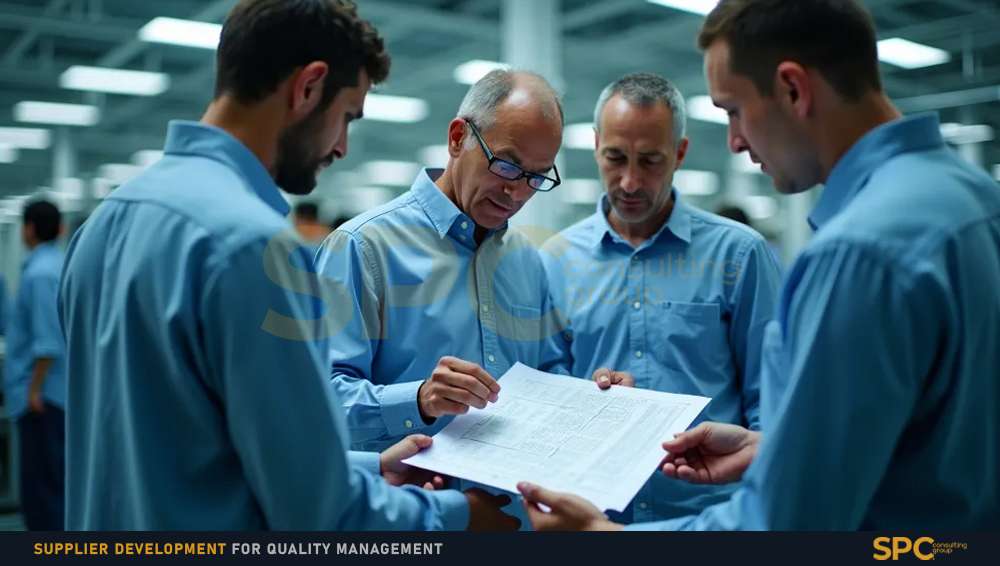
Supplier Development for Quality Management
Quick access
• Introduction
• Supplier Development According to IATF 16949
• Stages of the Supplier Development Process
• Conclusion
Introduction
In today’s highly competitive manufacturing environment, supplier development has become a fundamental pillar of quality management and operational excellence. This systematic process—particularly critical in the automotive industry—ensures that external suppliers are aligned with the customer’s Quality Management System (QMS) requirements. The IATF 16949:2016 automotive quality standard, an internationally recognized standard, establishes rigorous guidelines for supplier development while integrating key automotive quality tools such as Advanced Product Quality Planning (APQP) and the Production Part Approval Process (PPAP).
Supplier Development According to IATF 16949
Initial Evaluation and Selection
Clause 8.4 of IATF 16949:2016 automotive quality standard specifies the need for rigorous control of externally provided products and services. Organizations must perform a risk assessment that considers a supplier’s technical capability, financial stability, historical quality performance, and regulatory compliance.
Only approved suppliers should provide critical components, helping ensure the quality and reliability of the final product.
Supplier Qualification
Supplier qualification typically requires the successful submission of a Level 3 PPAP or higher. This process demonstrates effective process control and statistical capability, with a minimum Cpk of 1.67 generally expected for critical characteristics.
Meeting these requirements helps ensure that manufacturing processes are stable and capable of consistently meeting customer specifications.
Ongoing Development and Audits
Supplier performance should be monitored on an ongoing basis using key performance indicators (KPIs) such as Parts Per Million (PPM) defects and On-Time Delivery (OTD).
When supplier performance falls below expectations, corrective action plans should be implemented. On-site supplier audits based on methodologies such as VDA 6.3 or CQI-19 play a critical role in evaluating supplier performance and driving continuous improvement.
Certification Requirements
For final supplier approval, organizations generally require suppliers to maintain a Quality Management System certified to IATF 16949:2016 automotive quality standard or, for non-automotive suppliers, at minimum ISO 9001:2015 quality management standard.
In addition, traceability throughout the supply chain—including lower-tier suppliers—is essential to maintaining a transparent and controlled supplier network.
Stages of the Supplier Development Process
The Automotive Industry Action Group (AIAG) CQI-19 guideline structures supplier development into four stages aligned with APQP:
- Pre-Selection: Potential suppliers are identified through market research, financial risk assessment, and preliminary capability evaluations.
- Selection: Technical and quality feasibility are confirmed through initial supplier audits, prototype evaluations, and capability assessments.
- APQP / PPAP: Production readiness is validated through APQP activities, PPAP approval, and verification of Measurement System Analysis (MSA) results.
- Performance Monitoring: Supplier performance is continuously monitored to support ongoing improvement or, when necessary, supplier disqualification due to sustained poor performance.
Conclusion
Supplier development under IATF 16949 is essential for maintaining competitiveness and operational efficiency within the automotive industry. Through structured evaluation, qualification, and continuous improvement processes, organizations can ensure suppliers consistently meet demanding quality requirements while minimizing supply chain risks.
A disciplined supplier development process not only improves product quality but also strengthens supply chain resilience and positions organizations for long-term operational excellence.
Looking to strengthen your supplier development process and meet IATF 16949 requirements?
Contact the experts at SPC Consulting Group to request specialized training or consulting services.
Frequently asked questions
What is supplier development in the automotive industry?
Supplier development is a structured process of evaluating, qualifying, monitoring, and improving supplier performance to ensure consistent quality, delivery, and compliance with customer and industry requirements.
What are the supplier requirements under IATF 16949?
IATF 16949 requires organizations to evaluate suppliers based on risk, quality performance, technical capability, and compliance. Depending on the supplier’s role, organizations may also require PPAP approval, ongoing performance monitoring, and certification to IATF 16949 or ISO 9001.
How do you evaluate supplier performance?
Supplier performance is commonly measured using key performance indicators (KPIs) such as Parts Per Million (PPM), On-Time Delivery (OTD), audit results, corrective action effectiveness, and overall compliance with customer-specific requirements.
Training & Resources




COPYRIGHT: It is prohibited to copy, reproduce, distribute, publish, transmit, broadcast, or in any way exploit any part of this material without proper attribution or prior written authorization from Servicios Profesionales de Alta Consultoría S.C. (SPC Consulting Group) or the respective rights holders.
You must cite this article by copying and pasting the following text:
Supplier Development for Quality Management
SPC Consulting Group
https://spc-us.com/supplier-development-quality-management
If you want to know more about supplier development, get in touch with us today, or check out our online trainings courses accessible from any location.
You may also be interested in:
No Comments