


Warehouse functions and types of inventory
Quick access
• Main functions of a warehouse
• Types of inventory
• Best practices for warehouse and inventory management
• Conclusion
A warehouse is much more than a storage space. It is the heart of logistics, where goods are received, stored safely, picked, and shipped, while inventory is continuously monitored and controlled.
The way a warehouse manages its inventory can mean the difference between a smooth, profitable operation and a supply chain full of delays, excess costs, and dissatisfied customers.
Main functions of a warehouse
The functions of a warehouse go far beyond stacking boxes. They ensure that inventory is available, organized, and traceable.
1. Receiving goods

The warehouse begins its work with incoming shipments. It must verify that deliveries match purchase orders and that the inventory meets required quality standards.
2. Safe storage
A warehouse ensures that inventory is stored under optimal conditions: correct temperature, fire prevention systems, restricted access, and secure handling to avoid damage.
3. Inventory control
One of the most critical roles of a warehouse is tracking entries, withdrawals, and stock levels. Accurate inventory control prevents shortages, losses, and costly overstocking.
4. Order preparation (Picking)
Efficient picking means the warehouse organizes inventory to fulfill orders quickly and accurately, minimizing travel distance and errors.
5. Shipping and distribution
The warehouse ensures that orders are dispatched complete and on time. This is where inventory is transformed into customer deliveries.
6. Space optimization
A well-designed warehouse maximizes space by organizing inventory through racks, aisles, and strategic zoning.
7. Information and traceability
A modern warehouse doesn’t just store products—it generates data. Traceability of inventory ensures compliance with audits, regulations, and quality standards.
Types of inventory
Different types of inventory are managed within a warehouse, each serving a strategic purpose.
• Raw Material Inventory
Materials stored in the warehouse to guarantee continuous production. Maintaining this inventory at proper levels prevents production stoppages.

• Finished Goods Inventory
Products ready for sale or distribution. The warehouse organizes this inventory according to dispatch priorities, often applying FIFO or FEFO.
• Safety Stock Inventory
Extra inventory kept by the warehouse to handle unexpected demand spikes or supplier delays.
• Seasonal Inventory
Built up in the warehouse ahead of high-demand periods, such as holiday sales or back-to-school.
• Consignment Inventory
Products located at the customer’s warehouse, but ownership remains with the supplier until sold.
• Obsolete Inventory
A warehouse must also identify obsolete or expired inventory, which should be cleared to avoid hidden storage costs.
Best practices for warehouse and inventory management
To ensure efficiency, a warehouse must follow structured practices that keep inventory under control.
1. Rotation methods
- FIFO (First In, First Out)
Products that enter the warehouse first must be dispatched first.
Example: In a beverage warehouse, bottles received Monday should be shipped before those received Friday.
Best for: Food, medicine, cosmetics.
- LIFO (Last In, First Out)
The most recently added inventory leaves first.
Example: In a construction materials warehouse, gravel added last is used first.
Best for: Raw materials that don’t expire.
- FEFO (First Expired, First Out)
The inventory with the earliest expiration date is dispatched first.
Example: In a pharmaceutical warehouse, a medicine received later but expiring sooner must be shipped before an older batch.
Best for: Perishable products, food, pharma.
2. Inventory counts
- Cycle Counting: The warehouse reviews small portions of inventory regularly
- Full Inventory Counting: A total review of all items in the warehouse
3. Stock level policies
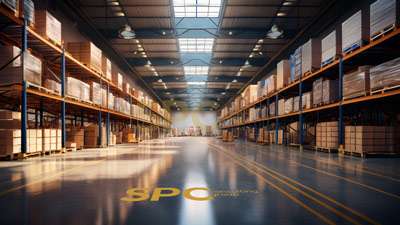
Setting minimum and maximum levels helps the warehouse keep inventory balanced—avoiding both excess and stockouts.
4. Physical organization
High-rotation inventory should be stored in easily accessible areas. A clear warehouse layout reduces travel time and errors.
5. Audits and validations
Frequent audits help compare physical inventory with system records, reducing discrepancies and improving accuracy.
Conclusion
A well-managed warehouse is the backbone of efficient logistics. Its functions—receiving, storing, controlling, picking, shipping, and optimizing—are all designed to keep inventory flowing seamlessly.
Understanding the different types of inventory and applying best practices ensures that a warehouse is not just storage but a strategic asset for competitiveness and profitability.
Is your warehouse operating at full efficiency? Are your inventory processes under control?
At SPC Consulting Group, we specialize in logistics consulting, warehouse optimization, and inventory control training.
👉 Contact us today and discover how to transform your warehouse and inventory management into a real competitive advantage.
Frequently asked questions about warehouses and inventory
What is a warehouse?
It is the physical space where a company’s inventory is stored, organized, and managed.
What is the difference between a warehouse and inventory?
A warehouse is the facility, while inventory refers to the goods stored within it.
What are the main warehouse functions?
Receiving, storage, inventory control, picking, shipping, space optimization, and traceability.
What types of inventory exist?
Raw materials, work in process, finished goods, safety stock, seasonal, consignment, and obsolete.
What happens if inventory is poorly managed?
The warehouse can face shortages, excess stock, high storage costs, and late deliveries.
What methods exist to control inventory in a warehouse?
FIFO, LIFO, FEFO, cycle counting, stock policies, and audits.
What are the benefits of optimizing a warehouse?
Better space utilization, reduced costs, accurate inventory control, and improved customer satisfaction.
Training & Resources




COPYRIGHT: It is prohibited to copy, reproduce, distribute, publish, transmit, broadcast, or in any way exploit any part of this material without proper attribution or prior written authorization from Servicios Profesionales de Alta Consultoría S.C. (SPC Consulting Group) or the respective rights holders.
You must cite this article by copying and pasting the following text:
Warehouse functions and types of inventory
SPC Consulting Group
https://spc-us.com/warehouse-functions-types-inventory
If you want to know more about warehouses and inventory, get in touch with us today, or check out our online trainings courses accessible from any location.
You may also be interested in:
No Comments